
Is yoga somatic therapy? Coming home to the living body

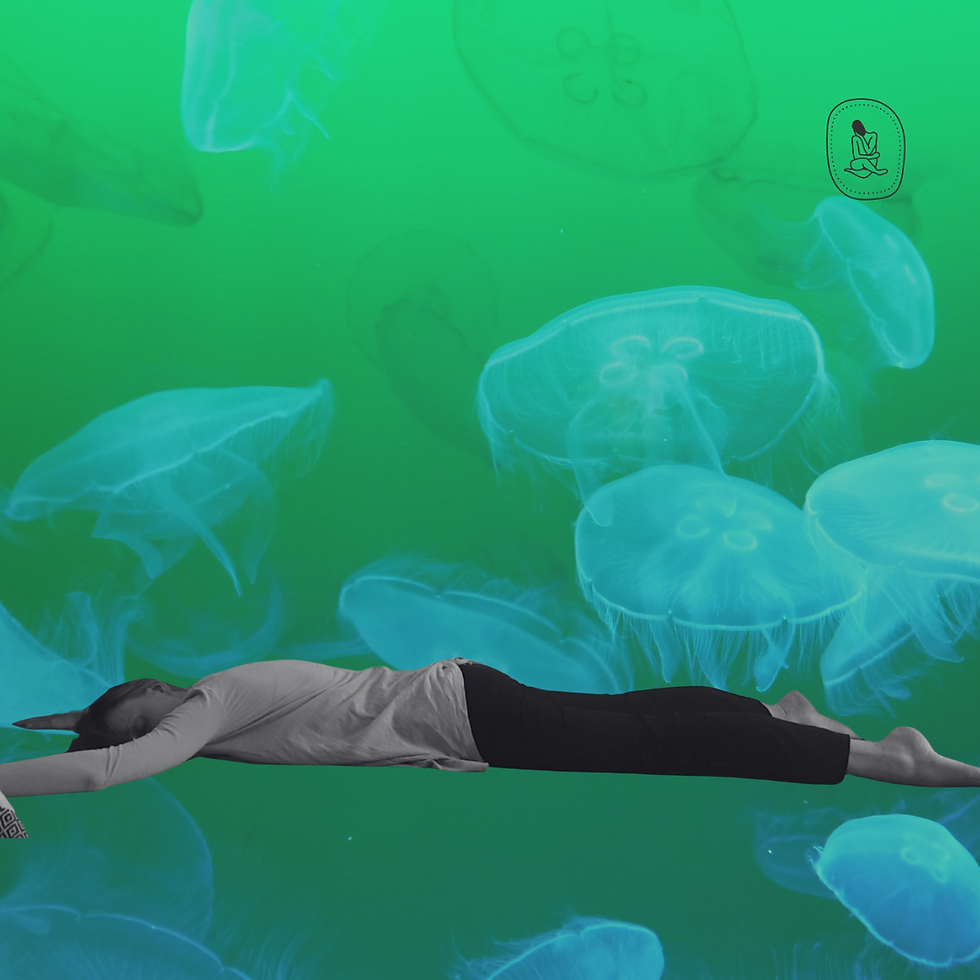
People often come to see me because their psychologist or psychiatrist has recommended including a more somatic approach. They may have spent years exploring their history and understanding their patterns, yet still find their body responding before choice has time to emerge. Their breath changes, their muscles brace, or they begin to feel far away.
Sometimes they ask, “Is this yoga therapy or somatic therapy?” It is an understandable question, particularly if their experience of yoga has been a class focused on stretching, strength or getting a posture right.
Yoga can be a somatic practice. In the trauma-sensitive yoga I specialise in, bodily experience and personal choice are central. Somatic is also the word I use to describe the relationship that holds all my work.
For me, somatic work means making space for all our experiences in the body, as living forms. Our thoughts, emotions, histories and relationships find expression in how we breathe, move, feel and respond. Whether we meet through bodywork, trauma-sensitive yoga, TRE® or meditation, I am listening to the whole person.
“We are a body that breathes, gurgles, smiles and gets hot and bothered. A moving, living form that moves, expresses and makes choices.”
The body experienced from within
The word somatic comes from the Greek soma, meaning body. Thomas Hanna’s work explores the soma as the living body experienced from within. Someone watching you move sees the outward form. You have access to the feeling of that movement, its effort, its ease and what it awakens in you.
You might notice pressure beneath your feet, warmth in your face, a tightening around your ribs or an impulse to turn away. You might feel very little, or find the experience difficult to describe.
All of this has a place.
Somatic practice invites curiosity about this inner landscape. As we listen, we may discover an impulse to change position, pause or seek support. We begin to recognise something of our own rhythms and make room for them in how we respond.
Yoga’s whole-person understanding
Yoga is rooted in the lands, peoples and traditions of South Asia, particularly India. Its diverse traditions have long explored suffering, liberation and the relationship between our physical, psychological and spiritual lives.
Much of the yoga we encounter today centres on asana, the physical forms. Yoga’s wider traditions also include ethical practice, breath, meditation, attention and inquiry. They invite us to consider how we live, how we relate and what we discover through experience.
The koshas, often described as layers or sheaths of our being, offer a way of exploring the physical body, breath and vitality, mind, discernment and bliss. They invite awareness of the many dimensions of ourselves, each woven into our experience of being alive.
Contemporary language sometimes calls this a biopsychosocial-spiritual perspective. In lived experience, it is the body that aches, the mind that worries, the relationships we carry and the longing for meaning or belonging. We bring all of ourselves into the room.
Why include a somatic approach?
Our medical system often separates care into different services. We may see a physiotherapist for physical concerns and a psychologist for psychological distress. These specialisations bring valuable knowledge, though the person moving between appointments continues to live as a whole. And because of this we are quite often left feeling 'unseen'.
I often meet people who can explain why they respond as they do and still struggle when the response arrives. They may know they are safe in the present while feeling their body preparing for danger. Others describe exhaustion, numbness or difficulty sensing what they need.
The referrals I receive from psychologists and psychiatrists recognise the value of including bodily experience. Somatic work can sit alongside the conversations already happening in therapy, offering space to explore how life feels within us.
We might begin with the meeting of your feet and the ground, the movement of an arm or the feeling of being supported by a chair. We can listen for what feels available and how you recognise that you have done enough. Understanding begins to have somewhere to land.
“Without the body, healing has nowhere to land.”
When yoga loses its somatic quality
Moving the body does not automatically make a practice somatic. Three things can draw us away from our experience:
an emphasis on getting the shape right,
instructions that leave little room for choice,
and a pace that encourages us to override our capacity.
We can become skilled at following directions while barely noticing ourselves. We might hold our breath to maintain a posture or continue because everyone else is continuing. Our attention goes towards meeting an expectation, and the body’s quieter messages become harder to hear.
For someone whose choices have been overridden, this deserves care. There needs to be room to sense, question, change direction and stop. Bringing the mind home into the body asks for a relationship in which our experience is welcome.
The trauma-sensitive yoga I specialise in
Trauma Center Trauma-Sensitive Yoga, or TCTSY, was developed at the Trauma Center in Boston by David Emerson and colleagues, in clinical consultation with Bessel van der Kolk. It brings Hatha yoga into relationship with understandings of trauma, attachment and the nervous system, and has been studied in clinical trials involving people with PTSD.
Within this approach, we return to the experience of the person practising. There are no hands-on adjustments. You are offered opportunities to explore physical forms and movements, notice sensation and make choices based on what you feel. There is no requirement to tell your trauma story.
You might explore moving an arm and notice the effort involved. You might choose another position, pause or remain as you are. Your choice shapes what happens next, and that choice is respected.
“In order to heal from trauma, we must do more than survive. We must reclaim our body as a successful agent of change and action.”— David Emerson
David Emerson’s work places the capacity to take effective action at the heart of the practice. This can be experienced through an ordinary movement: sensing something, choosing a response and discovering that you can act on it.
This is what makes TCTSY somatic. Your internal experience matters throughout. Together, we make space to explore presence and choice, at a pace that respects the body you bring today.
A lifetime of working with the living body
My relationship with somatic practice began before I had this language for it. In my early years, my mother took me to Feldenkrais classes. Later, I explored Thomas Hanna’s work through my own internal experience. Donna Farhi has also been one of my teachers, and I trained with Kathy Kain in Ortho-Bionomy, which I draw on in my massage practice.
My training in Eastern massage traditions has deepened my respect for the body’s rhythms and flow—spoken of as qi or ki in these traditions, and prana in yoga. These experiences continue to nourish how I meet the living soma.
Over 35 years as a bodyworker, I have continued to meet the person and the body in front of me. Each brings a history, a capacity and a way of communicating. The intelligent soma continues to deserve my deep listening respect.
Alongside specialised training in yoga therapy, TCTSY and TRE®, these years have given me a depth of somatic expertise. The healing arts meet in my work through listening, consent and relationship, with room for each person’s experience to guide us.
This is why I call all my work somatic. I am making space for the whole person and for how their experience takes form in the body.
Welcome to my Living Form Map™
The Living Form Map is the guiding framework through which I bring this somatic work together.
At its centre is coherence: exploring how the different aspects of ourselves come into relationship, and how we remain connected with life as it changes.
Experience before explanation.
Invitation before instruction.
Choice before performance.
Rhythm before intensity.
These principles shape the way we meet and how the practice unfolds.
We can experience a movement before needing to explain it. An invitation can be declined. We can find a pace that allows us to notice ourselves. Alongside these principles sit relationship before resolution, curiosity before certainty and patterns before problems.
Judith Herman expresses something essential here:
“She must be the author and arbiter of her own recovery.”— Judith L. Herman, Recovery from psychological trauma (1998).
Your experience and choices belong at the centre of the work. My role is to walk alongside you, offer possibilities and help create conditions in which you can explore what feels supportive.
The fourfold embodiment rhythms of the Living Form Map are:
Landing, the rhythm of safety;
Listening, the rhythm of awareness;
Moving, the rhythm of choice; and
Belonging, the rhythm of relationship.
They offer places for somatic inquiry.
Some days, Landing needs our attention. At another time, movement or connection may feel more available. We revisit these rhythms as our lives and capacities change.
“A map, not a prescription.”
Within this framework, TCTSY, TRE® and iRest meditation offer different ways of exploring our somatic landscapes. We draw on them with attention to the person, the moment and what is being experienced.
We are nature.
Living systems respond, adapt, rest and grow in relationship with their surroundings. Our bodies belong to this same living world.
The Sanskrit image of Soma, associated with the moon and sacred nectar, offers us a poetic way of thinking about nourishment—the nectar of the self. It invites us to consider what replenishes our relationship with being alive. In my healing arts practice, I imagine Soma through water—flowing, nourishing and finding its own way. What does your soma feel like to you? Perhaps earth, water, fire or air offers an image for what you sense within.
So, is yoga somatic therapy?
Yoga can be somatic when there is room to experience the body from within and respond through choice. Yoga therapy offers an individually tailored therapeutic approach, while TCTSY brings a specific trauma-sensitive framework to this work.
For me, somatic reaches into everything we make space for: sensation, thought, emotion, movement, stillness and relationship. All these experiences belong to the living person here.
This is the ground of my work. We begin with the body you arrive with today, explore with kind awareness and discover what supports you in being here.
If you would like to explore this with me, the Safe to Feel Embodiment Program™ offers a private 12-week process, priced at $1,825. Together, we turn towards coherence and the question: Can all of this belong—body, mind, emotion, history, relationship and environment?
We begin with the understanding that you are a living person with experiences to make space for, and nothing to fix. Drawing on yoga therapy and the healing arts, we agree together on practices that support you to find ground, connect with your living body and allow the soma to come alive, making room for your own process of trauma recovery and healing.


Comments